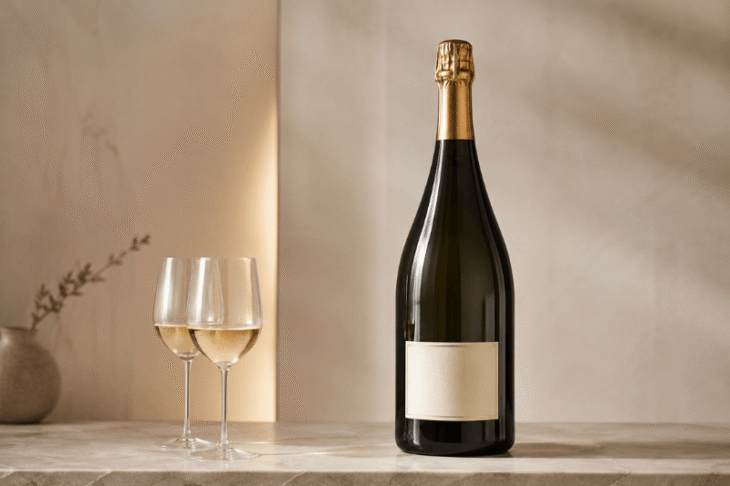
What Is a Champagne Magnum? Size, Servings & Best Uses
A Champagne magnum is a large-format 1.5-liter bottle of Champagne that holds the same amount as two standard 750 ml bottles and typically serves about 12 glasses.
A magnum is one of the most recognizable and celebrated Champagne bottle formats because it combines practical serving size with a sense of occasion. It is large enough to feel impressive at a wedding, anniversary, holiday dinner, corporate event, or milestone birthday, but still manageable enough for real-world serving. For many Champagne lovers, it is also the sweet spot for aging because the larger volume slows the wine’s exposure to oxygen compared with a standard bottle.
Key Takeaways
- A Champagne magnum holds 1.5 liters, or two standard 750 ml bottles.
- A magnum usually serves about 12 glasses, depending on pour size.
- Champagne often ages especially well in magnums because the bottle has a lower oxygen-to-wine ratio.
- Magnums are popular for weddings, anniversaries, corporate gifts, holiday parties, and formal dinners.
- A magnum makes Champagne feel more ceremonial, generous, and memorable than a standard bottle.
What Is a Magnum of Champagne?
A magnum of Champagne is a 1.5-liter bottle, equal to 150 cl, 1,500 ml, or about 50.7 fluid ounces. It contains twice as much Champagne as a standard 750 ml bottle.
The word “magnum” comes from Latin and means “great,” which fits the bottle’s role in wine culture. It is not just a bigger bottle. It is a format associated with celebration, sharing, aging potential, and visual impact. A standard bottle works beautifully for a small dinner, but a magnum changes the feeling of the table. It signals that the moment is worth marking.
For Champagne, the magnum is especially important because it offers a practical balance. It is large enough to serve a group, yet not so large that it becomes difficult to chill, carry, open, pour, or store.
How Many Bottles Are in a Magnum of Champagne?
A magnum of Champagne equals two standard bottles.
A standard Champagne bottle holds 750 ml. A magnum holds 1.5 liters, which is exactly double that amount. This makes planning easier because one magnum can replace two regular bottles while creating a more elevated presentation.
Here is the simple comparison:
| Bottle Type | Capacity | Standard Bottle Equivalent |
| Standard Champagne Bottle | 750 ml | 1 bottle |
| Champagne Magnum | 1.5 liters | 2 bottles |
For hosts, this matters because a magnum lets you serve more guests from one bottle. For gifting, it matters because the bottle feels more substantial and intentional than sending a standard bottle.
How Many Glasses Are in a Champagne Magnum?
A Champagne magnum usually serves about 12 glasses.
This estimate is based on a standard celebratory pour of around 4 ounces. Some sources estimate 12 to 14 flutes from a magnum, depending on glass size and pour style.
The exact number depends on how the Champagne is served:
| Pour Style | Approximate Servings From a Magnum |
| Generous pours | 10 glasses |
| Standard party pours | 12 glasses |
| Smaller tasting pours | 14 or more glasses |
For weddings, cocktail hours, and corporate events, I would plan conservatively. If the Champagne is the main drink, estimate fewer glasses per bottle. If it is used for a toast only, a magnum can stretch further.
Why Is Champagne Better in a Magnum?
Champagne is often considered better in a magnum because the larger bottle creates a lower oxygen-to-wine ratio, which can slow oxidation and support more graceful aging.
The neck and cork area of a magnum are not proportionally twice as large as the wine volume. That means the amount of oxygen in contact with the Champagne is smaller relative to the total liquid inside the bottle. This reduced oxygen exposure helps support slower, more balanced aging, while Wine Enthusiast notes that the oxygen under the cork represents a smaller proportion of the total volume in a magnum.
This is why wine professionals often speak highly of magnums. The format can help Champagne stay fresher for longer while gradually developing more complexity. Over time, the wine may show more layered aromas, a more integrated texture, and a more harmonious balance between fruit, acidity, bubbles, and mature notes.
That does not mean every magnum automatically tastes better. The producer, grape blend, vintage, dosage, cellar conditions, cork quality, and storage history still matter. But as a bottle format, the magnum gives Champagne an excellent environment for slow maturation.
Does Champagne Age Better in a Magnum?
Champagne generally ages better in a magnum than in a standard bottle because the larger volume slows the impact of oxygen exposure.
This is especially relevant for vintage Champagne and prestige cuvées, which are often built to develop over time. A magnum can preserve freshness while allowing the Champagne to mature more gradually. This slower development is part of the reason collectors, sommeliers, and Champagne houses often treat the magnum as an ideal bottle size for cellaring.
However, storage still matters. A poorly stored magnum will not age well simply because it is large. Champagne should be kept in a cool, dark, stable environment, away from heat, sunlight, vibration, and major temperature swings.
For long-term aging, the best conditions are:
- Consistent cool temperature
- Darkness or very low light
- Minimal vibration
- Proper humidity
- Stable storage position
- Protection from heat and dryness
A magnum gives Champagne an advantage, but storage protects that advantage.
What Does Champagne From a Magnum Taste Like?

Champagne from a well-stored magnum can taste fresher, more balanced, and more complex than the same Champagne aged in a standard bottle.
You may notice:
- Brighter acidity
- More refined bubbles
- Better-preserved fruit character
- More gradual development of toast, brioche, nutty, honeyed, or creamy notes
- A smoother balance between freshness and maturity
The difference is usually most noticeable with Champagne that has spent time aging. A young non-vintage magnum may taste similar to the same Champagne in a standard bottle. An older vintage magnum, however, may show the benefits of slower development more clearly.
Magnum vs Standard Champagne Bottle
A magnum and a standard bottle both hold Champagne, but they create different experiences. A standard bottle is convenient. A magnum feels more generous, more dramatic, and often more collectible.
| Feature | Standard Bottle | Magnum |
| Capacity | 750 ml | 1.5 liters |
| Equivalent | 1 bottle | 2 standard bottles |
| Typical Servings | About 6 glasses | About 12 glasses |
| Aging Potential | Good | Often better |
| Presentation | Classic | More impressive |
| Best For | Small dinners, gifts, casual celebrations | Weddings, parties, anniversaries, corporate gifts, cellaring |
| Handling | Easier | Requires more careful chilling and pouring |
Choose a standard bottle when convenience matters most. Choose a magnum when the moment deserves more presence.
Champagne Magnum Bottle Size Chart
A magnum is part of a larger family of Champagne bottle sizes. These large formats are often associated with celebrations, banquets, luxury dining, and collectible wines.
| Champagne Bottle Size | Capacity | Standard Bottle Equivalent | Approximate Servings |
| Half Bottle | 375 ml | 1/2 bottle | About 3 glasses |
| Standard Bottle | 750 ml | 1 bottle | About 6 glasses |
| Magnum | 1.5 L | 2 bottles | About 12 glasses |
| Jeroboam | 3 L | 4 bottles | About 24 glasses |
| Rehoboam | 4.5 L | 6 bottles | About 36 glasses |
| Methuselah | 6 L | 8 bottles | About 48 glasses |
| Salmanazar | 9 L | 12 bottles | About 72 glasses |
| Balthazar | 12 L | 16 bottles | About 96 glasses |
| Nebuchadnezzar | 15 L | 20 bottles | About 120 glasses |
Bottle-size names can vary slightly between wine regions, especially once you move beyond magnums. In Champagne, the larger formats are traditionally associated with biblical names and grand-scale celebrations. Decanter notes that in Champagne and Burgundy, a 4.5-liter bottle is referred to as a Rehoboam, while a 6-liter Champagne bottle is known as a Methuselah.
When Should You Choose a Champagne Magnum?
A Champagne magnum is best for occasions where the bottle itself should feel like part of the celebration.
Choose a magnum for:
- Weddings
- Engagement parties
- Anniversaries
- Milestone birthdays
- Holiday dinners
- Corporate gifts
- Retirement parties
- Awards ceremonies
- New Year’s Eve celebrations
- Formal dinner parties
- Client appreciation gifts
- Housewarming gifts
A magnum is especially useful when you want the bottle to serve both a practical and emotional purpose. It gives you more Champagne for a group, but it also creates a stronger visual impression when brought to the table or presented as a gift.
Is a Champagne Magnum Good for Gifting?
A Champagne magnum is excellent for gifting because it feels more generous, more memorable, and more ceremonial than a standard bottle.
For personal gifts, a magnum works well for couples, hosts, parents, close friends, newlyweds, and anyone celebrating a major milestone. For business gifts, it can feel more polished and substantial than a typical bottle of wine. It communicates appreciation without needing a long explanation.
This is also where presentation matters. A magnum paired with elegant accessories, premium packaging, or an engraved Champagne saber can turn a bottle into a complete celebration gift. For California Champagne Sabers, this is a natural connection because the brand is built around the ritual of opening Champagne beautifully, not just serving it.
A magnum gives the recipient something to share. A Champagne saber gives them a way to make the opening unforgettable.
How to Serve a Champagne Magnum
A Champagne magnum should be served well chilled, handled carefully, and opened with patience.
Because a magnum is larger than a standard bottle, it takes longer to chill. It is also heavier, so it should be held securely with two hands when moving, opening, or pouring.
To serve a Champagne magnum properly:
- Chill it thoroughly before opening.
- Use a large ice bucket if serving at an event.
- Dry the bottle before handling so it does not slip.
- Remove the foil and loosen the cage carefully.
- Keep control of the cork at all times.
- Pour slowly to preserve the bubbles.
- Return the bottle to ice between pours.
Champagne should feel effortless when served, but that effortless look comes from preparation. A magnum rewards the host who plans ahead.
How Long Does It Take to Chill a Champagne Magnum?
A Champagne magnum usually needs more chilling time than a standard bottle because it contains twice as much liquid.
As a general guide:
| Chilling Method | Approximate Time |
| Refrigerator | 4 to 6 hours |
| Ice bucket with ice and water | 45 to 60 minutes |
| Freezer | Not recommended |
An ice bucket works faster when it contains both ice and water because the cold water surrounds the bottle more evenly than ice alone. Avoid placing a magnum in the freezer for long periods. Champagne is pressurized, and extreme cold can affect both safety and quality.
Can You Saber a Champagne Magnum?
A Champagne magnum can be sabered, but it requires extra care, proper chilling, and safe technique.
Sabering depends on pressure inside the bottle, the seam in the glass, and a confident motion along the bottle’s neck. A magnum creates a dramatic presentation because of its size, but that same size also makes it heavier and less forgiving than a standard bottle.
For safety, anyone sabering a magnum should:
- Chill the bottle thoroughly
- Remove foil and loosen the cage carefully
- Point the bottle away from people, pets, windows, and fragile objects
- Hold the bottle firmly at an angle
- Use the seam as the guide
- Use a proper Champagne saber
- Avoid forcing the motion
- Never drink from the broken neck
- Inspect the area after opening
For most people, it is better to practice sabering with a standard bottle before attempting a magnum. The visual payoff can be incredible, but the technique should always be treated with respect.
How to Store a Champagne Magnum
Store a Champagne magnum in a cool, dark, stable place away from heat, sunlight, and vibration.
The best storage conditions are similar to standard Champagne, but the bottle size makes planning more important. Magnums take up more room, so they need enough shelf space and stable support. Avoid placing them somewhere they may roll, shake, or be exposed to temperature changes.
Good storage rules include:
- Keep the bottle away from direct light.
- Avoid storing it near appliances, ovens, windows, or heating vents.
- Maintain a stable cool temperature.
- Keep long-term bottles in proper wine storage when possible.
- Avoid frequent movement.
- Protect the cork from excessive dryness.
If the magnum is intended for a special date, such as a wedding anniversary or milestone birthday, store it carefully and give yourself enough time to chill it before serving.
Is a Champagne Magnum Worth It?
A Champagne magnum is worth it when the occasion calls for more than an ordinary bottle.
It may not always be the cheapest way to buy Champagne by volume. In fact, magnums can cost more per ounce because they are produced in smaller quantities, require more specialized handling, and often carry higher presentation value. But value is not only about volume. A magnum offers experience, presence, aging potential, and a sense of generosity.
A magnum is worth considering when:
- You are hosting a group.
- You want a bottle that looks impressive.
- You are buying for a milestone event.
- You want a gift that feels premium.
- You are choosing Champagne for aging.
- You want the opening moment to feel special.
For everyday drinking, a standard bottle is often enough. For a celebration people will remember, a magnum has a stronger impact.
Common Mistakes to Avoid With Champagne Magnums
A Champagne magnum is impressive, but it still needs proper handling. These are the mistakes I would avoid.
Not Chilling It Long Enough
A magnum needs more time to chill than a standard bottle. If it is not cold enough, it may foam excessively, taste less refreshing, and become harder to open cleanly.
Assuming Every Magnum Is Automatically Better
Bottle size helps, but it does not replace quality. The Champagne house, cuvée, vintage, and storage history still matter.
Forgetting How Heavy It Is
A magnum is heavier than a standard bottle and can be awkward to pour with one hand. Use both hands and pour slowly.
Buying Too Little for a Large Party
One magnum usually serves about 12 glasses. If guests will drink more than one glass, plan accordingly.
Treating Sabering as a Party Trick
Sabering is a ceremonial opening method, not something to rush. It should be done with a proper saber, a chilled bottle, open space, and careful attention to safety.
Make Every Magnum Moment Feel Bigger
A Champagne magnum is more than a larger bottle. It is a celebration format with practical, sensory, and emotional value. It holds two standard bottles, serves about 12 glasses, ages beautifully when stored well, and brings a sense of occasion to the table before the first pour even begins.
For weddings, anniversaries, corporate gifts, holiday dinners, and milestone celebrations, a magnum makes Champagne feel more intentional. The right bottle, setting, glassware, and opening ritual can turn a simple toast into a moment people remember.
To make that moment even more memorable, California Champagne Sabers offers beautifully crafted Champagne sabers, engraving options, gift-ready saber sets, Champagne selections, and celebration accessories designed for meaningful openings and elevated toasts. Whether you are pairing a magnum with a personalized saber, preparing a standout gift, or planning a polished corporate celebration, the right saber and presentation can make the occasion feel as impressive as the bottle itself.
Frequently Asked Questions
What is a Champagne magnum?
A Champagne magnum is a 1.5-liter bottle of Champagne. It holds the same amount as two standard 750 ml bottles and usually serves about 12 glasses.
How many ounces are in a Champagne magnum?
A Champagne magnum contains about 50.7 fluid ounces.
Is a magnum two bottles?
Yes. A magnum equals two standard Champagne bottles.
How many glasses are in a magnum of Champagne?
A magnum typically serves about 12 glasses, though the number can range from 10 to 14 depending on pour size and glassware.
Why do magnums age better?
Magnums age well because they have a lower oxygen-to-wine ratio than standard bottles. This can slow oxidation and help Champagne develop more gradually.
Can you saber a Champagne magnum?
Yes, a Champagne magnum can be sabered, but it should be fully chilled and handled with extra care. A proper Champagne saber, open space, and safe technique are essential.