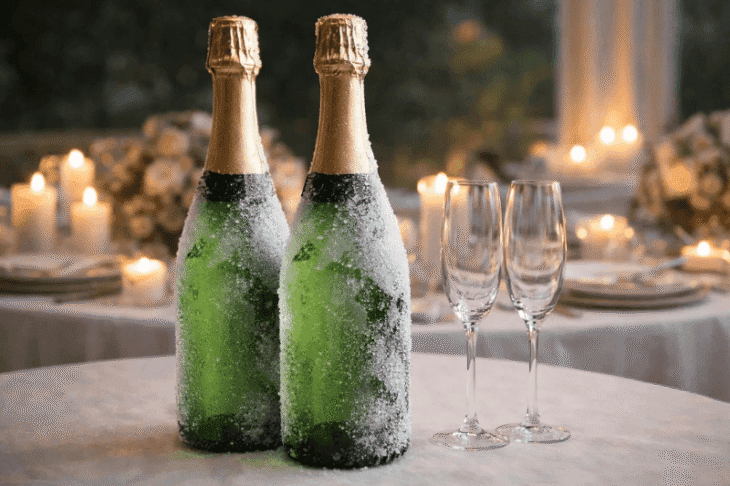
Does Champagne Freeze? What Happens, Whether It’s Ruined, and How to Save It
Last Updated: April 09, 2026
Yes, champagne can freeze. Most bottles begin to freeze at temperatures below water because alcohol and dissolved sugar lower the freezing point, but a household freezer is still cold enough to turn champagne slushy or solid. Freezing can flatten the bubbles, dull the aromas, and in some cases increase pressure enough to crack the bottle or force out the cork. If champagne freezes, thaw it slowly in the refrigerator and inspect the bottle carefully before opening.
Champagne is meant to be crisp, lively, and celebratory, whether you are pouring it at a dinner party or opening it with a saber for a special occasion. But one forgotten bottle in the freezer can raise a very practical question: does champagne freeze, and is it still good if it does?
The short answer is yes, champagne can freeze, and freezing is not ideal for either the wine or the bottle. Still, a frozen bottle is not always a total loss. In many cases, the wine can be thawed and used, though the quality may not be the same as before.
This guide explains exactly what temperature champagne freezes at, what happens inside the bottle, whether it is ruined, how to thaw it safely, and the best way to chill champagne without damaging it.
Key Takeaways
- Champagne can freeze in a standard home freezer, usually somewhere around 15°F to 23°F, depending on alcohol and sugar content.
- A frozen bottle can lose carbonation and may taste flatter or less expressive after thawing.
- Bottle damage is possible because frozen liquid expands and sparkling wine is already under pressure.
- Slow thawing in the refrigerator is the safest way to handle frozen champagne.
- The fastest safe way to chill champagne is an ice-and-water bath, not an extended stay in the freezer.
Can Champagne Freeze?
Yes, champagne can freeze.
Although champagne contains alcohol, it does not have enough alcohol to stay liquid in a household freezer indefinitely. Most champagne is around 12% alcohol by volume, which lowers the freezing point compared with plain water, but not enough to prevent freezing in typical freezer conditions.
That means a bottle left in the freezer too long can become slushy, partially frozen, or fully solid.
This matters because champagne is not just wine. It is sparkling wine under pressure, sealed with dissolved carbon dioxide that creates its signature mousse, bead, and effervescence. When freezing disrupts that balance, the result can be anything from a slight loss of sparkle to a cracked bottle and a messy freezer.
At What Temperature Does Champagne Freeze?
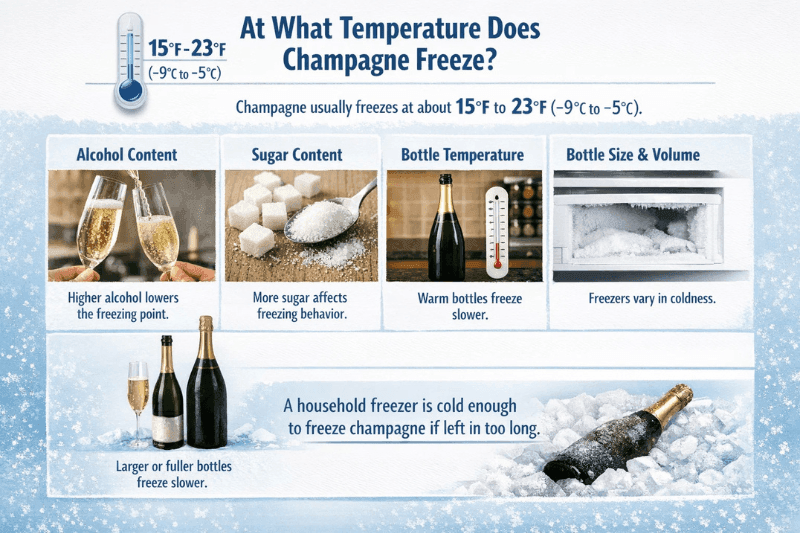
Champagne usually freezes at about 15°F to 23°F.
The exact freezing point varies because champagne is not a single uniform liquid. Its freezing behavior depends on several factors, especially:
Alcohol content
Alcohol lowers the freezing point. Since most champagne sits around 12% ABV, it freezes at a lower temperature than water but still freezes in a typical freezer.
Sugar content
Residual sugar also affects freezing behavior. Sweeter styles, such as demi-sec, may freeze a bit differently from a very dry brut because dissolved sugar changes how ice crystals form.
Bottle temperature before chilling
A room-temperature bottle takes longer to freeze than a bottle that was already chilled.
Bottle size and volume
A full 750 mL bottle takes longer to freeze than a half-full bottle. Larger bottles may also behave differently simply because of their greater thermal mass.
Freezer performance
Not all freezers run at the same true temperature. Some are colder than their setting suggests, and some cycle unevenly. That is why exact freezing times vary from one home to another.
In practical terms, a standard household freezer is cold enough to freeze champagne if the bottle is left in long enough.
What Happens When Champagne Freezes?
When champagne freezes, several things can happen at once. Some affect the bottle. Others affect the wine itself.
Pressure builds inside the bottle
Champagne bottles already hold substantial internal pressure. That pressure is part of what keeps dissolved carbon dioxide in solution and gives sparkling wine its lively texture.
When champagne begins to freeze, the water portion of the liquid forms ice crystals and expands. That expansion can increase stress inside the bottle. In some cases, the cork may shift or pop. In more severe cases, the bottle may crack or fail.
Not every frozen bottle explodes, but freezing does create a real safety risk.
Carbonation can weaken
Champagne depends on dissolved CO₂ for its sparkle. Freezing interferes with that balance.
After thawing, the wine may still bubble, but the mousse is often weaker and the stream of bubbles less elegant. Even when the bottle stays intact, previously frozen champagne can seem less energetic in the glass. The texture may feel softer, coarser, or shorter-lived than it should.
For a wine whose identity depends on freshness and effervescence, that loss is noticeable.
Flavor, aroma, and texture can change
Aromas in champagne are delicate. Fruit notes, brioche tones, citrus lift, and floral details all show best when the wine is properly chilled, not over-chilled or frozen.
Once champagne freezes and thaws, the sensory profile can shift. Common changes include:
- muted aromas
- flatter palate texture
- harsher acid perception
- less refined bead
- a duller finish
The wine may still be drinkable, but it often loses some of the precision and elegance that make champagne special in the first place.
Can a Champagne Bottle Explode in the Freezer?
Yes, a champagne bottle can crack, leak, or burst in the freezer.
Sparkling wine bottles are built to withstand pressure, but freezing introduces a different problem. As the liquid turns to ice, it expands. That extra volume has nowhere to go in a sealed bottle already under pressure.
Possible outcomes include:
- the cork pushing upward or ejecting
- wine leaking around the closure
- glass cracking at a weak point
- the bottle shattering in the freezer
The risk is real enough that frozen champagne should always be handled carefully.
Safety tips if a bottle froze
- Do not try to saber a frozen or compromised bottle.
- Do not force the cork out.
- Do not handle a visibly cracked bottle casually.
- If the bottle is leaking, fractured, or shows glass damage, discard it safely.
- Let the bottle thaw gradually in the refrigerator before deciding whether it is usable.
If there is any chance glass has entered the wine, do not drink it.
Is Frozen Champagne Ruined?
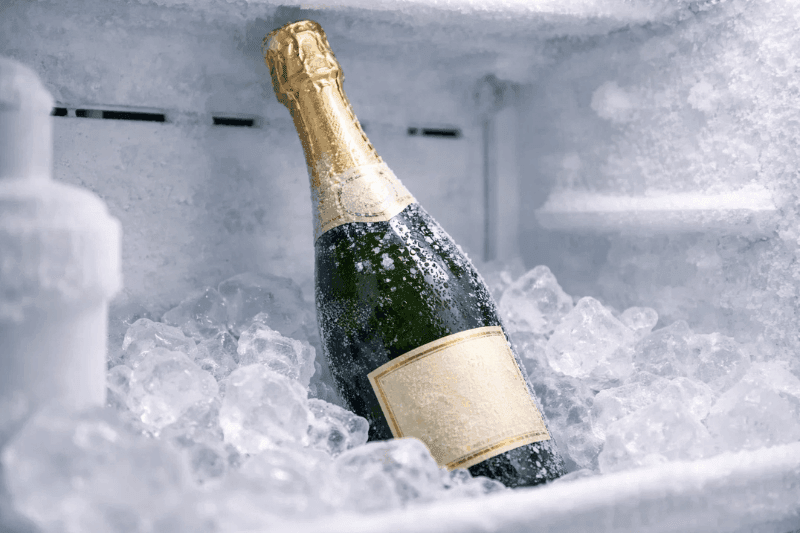
Not always. But it may no longer be worth serving on its own.
A good way to think about frozen champagne is to separate safety, drinkability, and quality.
If the champagne is only slightly slushy
This is the best-case scenario. If the bottle is intact and the wine was not frozen solid, it may recover with relatively little damage, especially if thawed slowly.
If the bottle froze solid but stayed intact
The wine may still be usable, but expect some loss of effervescence and aromatic lift. It may be acceptable for casual drinking, though it is less likely to show the refinement you would want for a toast or celebration.
If the cork shifted or popped
This usually means carbonation escaped. The wine may still be usable, but it will likely taste flat or tired.
If the bottle cracked, leaked, or shattered
Do not try to save it for drinking. Safety comes first.
So, is frozen champagne ruined? Sometimes no, but often at least partly compromised. In many cases it is still suitable for cocktails, sauces, syrups, or desserts even if it no longer tastes like pristine sparkling wine.
What to Do If Your Champagne Froze
If you discover a frozen bottle, the goal is to protect both the wine and yourself.
1. Move it to the refrigerator
Transfer the bottle from the freezer to the refrigerator and let it thaw slowly. Gradual thawing is gentler on the wine and reduces sudden pressure changes.
2. Do not shake it
Shaking disturbs what carbonation remains and increases the chance of overflow or rapid fizz loss when opened.
3. Inspect the bottle before opening
Check for:
- cracks in the glass
- seepage around the cork
- pushed or lifted closure
- unusual stress around the neck
If the bottle appears damaged, do not open and pour it for drinking.
4. Open it carefully
Once fully thawed, chill it to proper serving temperature if needed, then open gently. Keep your face and hands out of the direct path of the cork.
5. Evaluate the wine
Pour a small amount into a flute or white wine glass. Look for:
- active bubbles
- clean aroma
- fresh taste
- reasonable texture
If it still shows life, you can drink it. If it seems flat, use it in recipes or cocktails instead.
How Long Can Champagne Stay in the Freezer?
There is no one universal freeze time because freezer temperature, bottle size, starting temperature, and sugar level all matter.
That said, these general ranges are useful:
- 15 to 20 minutes: often enough for a quick chill if the bottle started cool
- 30 minutes: colder, but should still be monitored closely
- 45 to 60 minutes: increasingly risky, depending on the freezer
- Several hours or overnight: high risk for freezing solid, cork movement, and bottle damage
The safest rule is simple: if you put champagne in the freezer, set a timer immediately.
A freezer can help in a true time crunch, but it should be treated as a short-term emergency chill, not a standard chilling method.
The Fastest Safe Way to Chill Champagne
The best fast-chill method is an ice-and-water bath.
Plain cold air in a freezer chills a bottle more slowly and less evenly than ice water surrounding the bottle. Water transfers heat more efficiently than air, which is why an ice bucket with water works so well.
Ice-and-water bath
Fill a bucket or large container with ice and cold water, then submerge the bottle of champagne up to the neck.
Time: about 15 to 20 minutes
This is the best all-around method for speed, even chilling, and preserving quality.
Salted ice bath
Add a handful of salt to the ice water to make the bath even colder.
Time: often faster than a standard ice bath
This is especially useful when you need a bottle ready quickly for guests or a celebration.
Refrigerator
A refrigerator is slower but very safe.
Time: usually a few hours, depending on starting temperature
It is ideal when you can plan ahead.
Why not rely on the freezer?
Because the line between “perfectly chilled” and “forgotten too long” is thin. Champagne is too pressure-sensitive and too delicate to make freezer chilling your default habit.
Proper Champagne Storage and Serving Temperature

Serving temperature and storage temperature are not the same thing, and confusing them is one reason bottles get mishandled.
Best long-term storage conditions
For longer-term storage, champagne does best in a cool, dark, stable environment. Ideal conditions generally include:
- temperature around 50°F to 59°F
- minimal vibration
- protection from direct light
- no major temperature swings
If you are storing champagne for aging or keeping premium bottles in reserve, stability matters more than extreme cold.
Should champagne be stored in the refrigerator?
For short-term storage before serving, refrigeration is perfectly fine. It keeps the bottle cold and ready for the occasion. However, to store champagne properly over the long term, a standard kitchen refrigerator is usually less ideal because it is colder, drier, and more prone to vibration than a wine fridge or a cool, cellar-like space.
Should bottles be stored horizontally?
Traditionally, many wine bottles are stored horizontally to help keep corks from drying out. With champagne, practices vary, especially for shorter holding periods, but stable temperature and low disturbance matter more than obsessing over bottle angle for casual storage.
Best serving temperature
Champagne is usually best served around 45°F to 50°F, depending on style.
Too warm, and it can feel loose or foamy. Too cold, and the aromas are muted and the wine loses expressive detail.
A properly chilled bottle should feel brisk and refreshing while still allowing the bouquet to open in the glass.
What to Do With Champagne That Lost Its Bubbles
If your thawed champagne tastes flat, it does not have to go to waste.
Some of the best uses include:
Cocktails
Flat champagne can still work well in mixed drinks, especially where sparkling lift is less important than flavor.
Syrups
Reduce champagne with sugar for a flavorful syrup to drizzle over fruit, cake, or sorbet.
Sauces
Champagne works beautifully in cream sauces, butter sauces, and reductions for seafood or poultry.
Desserts
Use it in granita, sorbet, glazes, mousses, or poached fruit.
Brunch recipes
It can still add brightness to sauces, batters, or fruit-based preparations, even if the sparkle is gone.
If the bottle retained some character but lost its elegance, repurposing it is often the smartest move.
Do Prosecco, Cava, and Other Sparkling Wines Freeze Too?

Yes. Prosecco, Cava, Crémant, and other sparkling wines can freeze too.
The same basic principles apply because these wines also contain water, alcohol, dissolved solids, and carbonation under pressure. Exact freezing points vary depending on alcohol level, sugar, and production style, but any sparkling wine can be damaged by being left in a freezer too long.
That means the guidance in this article applies beyond champagne itself:
- freeze risk is real
- carbonation can decline
- bottle stress can increase
- slow thawing is safest
- ice-water chilling is better than freezer neglect
Frequently Asked Questions
Does champagne freeze in a home freezer?
Yes. A household freezer is usually cold enough to freeze champagne if the bottle is left inside long enough.
At what temperature does champagne freeze?
Champagne typically freezes around 15°F to 23°F, though the exact point varies based on alcohol and sugar content.
Is champagne ruined if it freezes?
Not always. Slightly slushy champagne may recover fairly well, while fully frozen champagne often loses some carbonation and finesse. A cracked or leaking bottle should not be used for drinking.
Can a champagne bottle explode in the freezer?
Yes, it can crack, leak, or force out the cork because freezing liquid expands and sparkling wine is already under pressure.
How do you thaw frozen champagne?
Move it to the refrigerator and let it thaw slowly. Do not shake it or expose it to rapid heat.
Can you still drink champagne after it freezes?
Sometimes yes, provided the bottle is intact and the wine still smells and tastes clean. If the carbonation is weak, it may be better for cooking or cocktails.
Can you put champagne in the freezer for 20 minutes?
Yes, many people do this for a quick chill, but you should always set a timer. The risk increases fast once the bottle is forgotten.
What is the best way to chill champagne fast?
An ice-and-water bath, especially with salt added, is the fastest safe way to chill champagne while preserving its quality.
Keep Every Celebration Crisp, Sparkling, and Ready
Champagne can freeze, and a standard freezer is cold enough to do it. When that happens, the wine may lose bubbles, the aromas may dull, and the bottle itself can become a safety concern. But a frozen bottle is not automatically ruined.
If the bottle is intact, thaw it slowly in the refrigerator, open it carefully, and judge it by its bubbles, aroma, and taste. If it no longer performs like true champagne should, repurpose it rather than waste it.
For the best experience, skip the risky freezer routine and chill champagne the right way: cold, controlled, and ready to celebrate.
When the bottle is perfectly chilled and the moment calls for something unforgettable, explore California Champagne Sabers for expertly crafted champagne sabers, personalized Champagne Saber Engraving, and premium Extras & Accessories that elevate every toast. Whether you are buying for your own celebrations, hosting elegant events, or choosing a memorable gift, the right finishing details can make the champagne experience feel even more special.