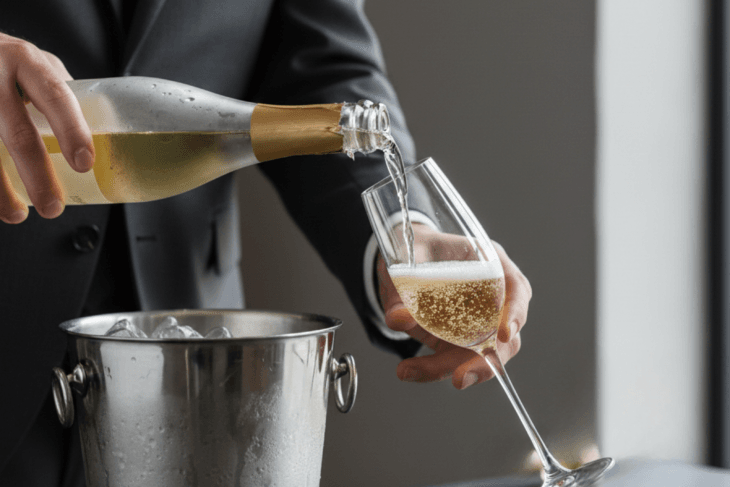
Champagne Serving Temperatures: The Science of Perfect Pouring
The ideal Champagne serving temperature is 46–50°F (8–10°C), with vintage, rosé, and prestige cuvées best served slightly warmer at 50–54°F (10–12°C) to fully express aroma and texture.
Champagne is often judged by its bubbles, yet temperature quietly determines whether those bubbles carry elegance or chaos. Serving too cold suppresses aroma and flattens texture. Serving too warm causes carbon dioxide to escape too quickly, stripping balance and finesse. Temperature is not a preference. It is a control mechanism that governs how Champagne behaves from bottle to palate.
Understanding temperature means understanding Champagne itself as a living, pressurized system rather than a static beverage.
Key Takeaways
- Champagne performs best between 46–50°F (8–10°C) for balance and freshness
- Vintage, rosé, and prestige cuvées show more complexity at 50–54°F (10–12°C)
- Colder temperatures suppress aroma; warmer temperatures release CO₂ too fast
- Pouring down the glass wall preserves mousse and aromatic integrity
- Proper chilling requires ice and water, not just refrigeration
The Physics and Chemistry Behind Champagne Temperature
Champagne temperature controls carbon dioxide solubility, aroma release, bubble size, and mouthfeel perception.
Carbon dioxide dissolves more readily in colder liquid. As temperature rises, CO₂ becomes less soluble and escapes faster, forming larger, more aggressive bubbles. This directly affects mousse texture and aromatic lift.
At the same time, colder temperatures reduce volatility of aromatic compounds. Esters and autolytic aromas remain trapped in the liquid, limiting expression. Warmer temperatures release aroma but risk imbalance if CO₂ escapes too quickly.
Taste perception also shifts. Cold dulls sweetness, bitterness, and acidity simultaneously, compressing flavor range.
What Happens When Champagne Is Too Cold
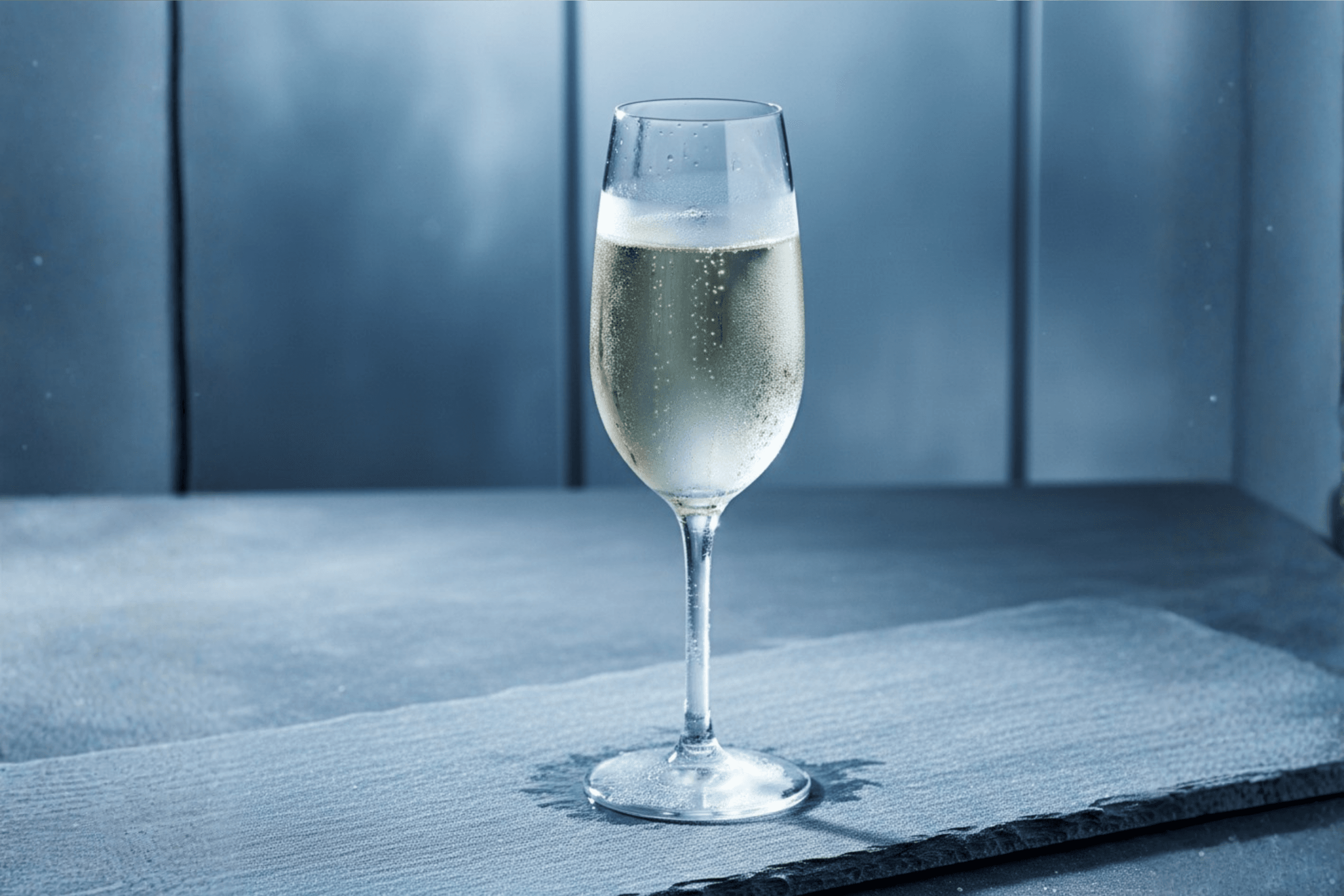
Below 40°F (4°C), Champagne loses aromatic clarity, texture, and flavor resolution.
Excessive cold numbs taste receptors and suppresses volatile aromatics. Bubbles appear finer but lack energy. The wine feels sharp, narrow, and linear, masking fruit, brioche, and mineral nuance.
The tradition of serving Champagne ice-cold emerged historically to conceal flaws. Modern Champagne no longer requires concealment.
What Happens When Champagne Is Too Warm
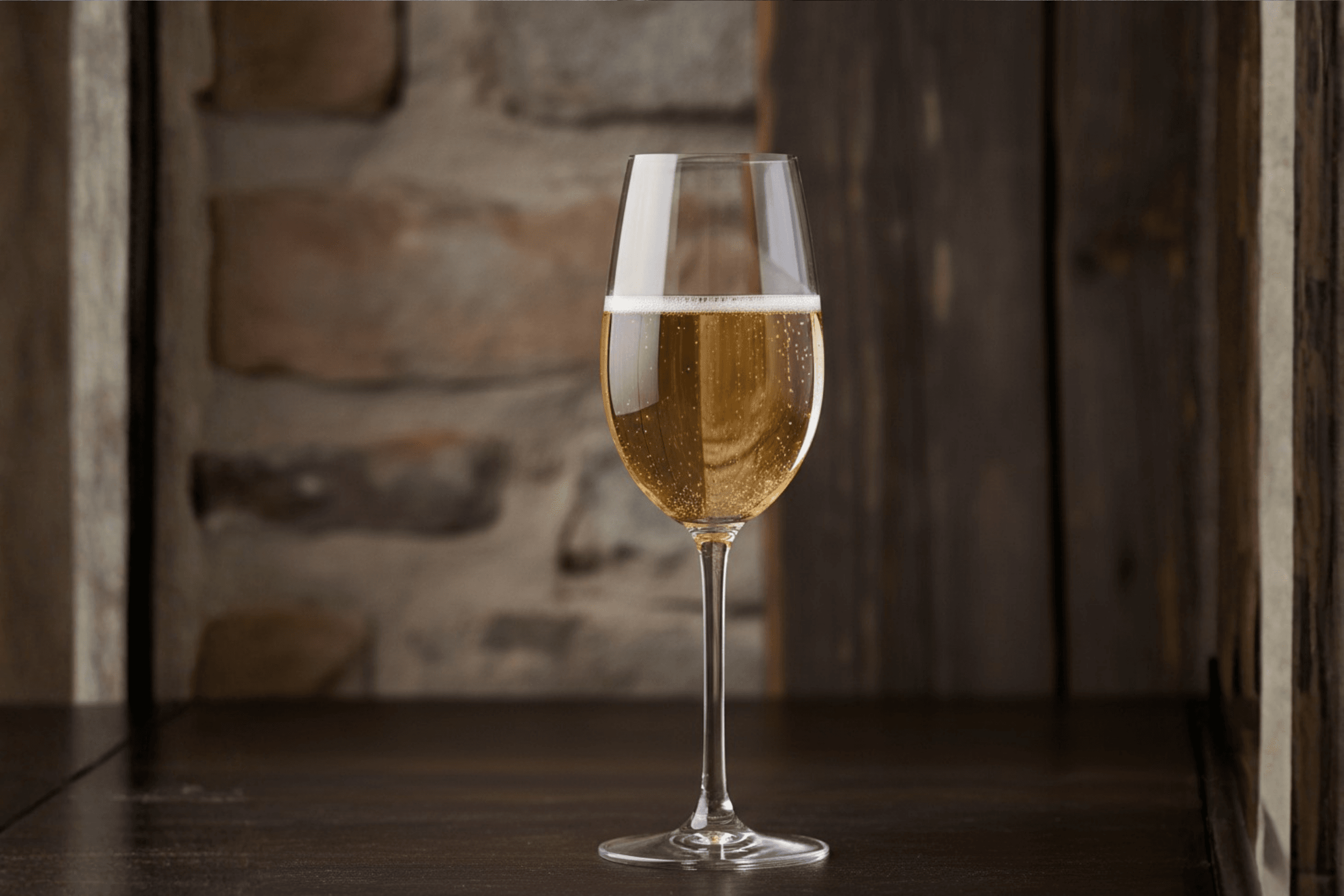
Above 54°F (12°C), Champagne releases CO₂ too quickly, causing coarse bubbles and aromatic distortion.
Warm Champagne foams aggressively on pour. Carbonation dissipates rapidly, leaving a flat mid-palate. Alcohol becomes more prominent, acidity feels disjointed, and oxidation accelerates in the glass.
What begins expressive often ends unbalanced within minutes.
The Ideal Serving Temperature Range Explained
The 46–50°F (8–10°C) range balances carbonation retention with aromatic expression for most Champagnes.
This range preserves effervescence while allowing aromas to lift gradually as the wine warms in the glass. Since Champagne typically gains 2–4°F after pouring, starting slightly cooler ensures optimal expression during drinking rather than only at first sip.
Champagne Serving Temperature by Style
Different Champagne styles require different serving temperatures to express balance and structure.
| Champagne Style | Ideal Serving Temperature | Why This Temperature Works |
| Non-Vintage Brut | 46–50°F (8–10°C) | Preserves balance between acidity, freshness, and approachability. |
| Demi-Sec | 46–50°F (8–10°C) | Controls sweetness and prevents residual sugar from dominating the palate. |
| Extra-Brut | 42–46°F (6–8°C) | Emphasizes tension, minerality, and structural precision. |
| Brut Nature / Zero Dosage / Pas Dosé | 42–46°F (6–8°C) | Highlights terroir expression and chalk-driven structure through colder service. |
| Vintage Champagne | 50–54°F (10–12°C) | Allows extended lees-aging aromas to emerge and expand aromatically. |
| Prestige Cuvées | 50–54°F (10–12°C) | Reveals layered complexity, depth, and a long, expressive finish. |
| Late-Disgorged Champagne | 52–55°F (11–13°C) | Slightly warmer service unlocks tertiary aromas from additional bottle age. |
| Blanc de Blancs (100% Chardonnay) | 46–50°F (8–10°C) | Preserves citrus freshness and finesse without collapsing texture. |
| Blanc de Noirs (Pinot Noir / Pinot Meunier) | 48–52°F (9–11°C) | Supports body, vinosity, and red-fruit-driven structure. |
| Rosé Champagne | 46–50°F (8–10°C) | Maintains fruit clarity and aromatic lift. |
| Rosé de Saignée | 48–52°F (9–11°C) | Softens tannic grip and enhances structure through added warmth. |
| Grower Champagne (RM) | 46–52°F (8–11°C) | Temperature adjusted to reflect grape composition and terroir expression. |
| Oak-Aged Champagne | 48–52°F (9–11°C) | Warmer service highlights toast, spice, and textural depth. |
Why Vintage and Prestige Champagnes Need More Warmth
Vintage and prestige Champagnes are built for depth rather than immediacy. Extended lees aging, lower yields, and more deliberate blending create wines whose defining characteristics do not reveal themselves at very cold temperatures.
- Autolytic compounds require warmth to activate
Extended lees aging generates compounds responsible for brioche, toasted nut, cream, and subtle umami notes. These aromas are heavier and less volatile than fresh fruit esters, meaning cold temperatures suppress them almost entirely.
- Cold service collapses dimensionality
When served too cold, complex Champagnes present primarily as acidity and effervescence. Texture, aromatic layering, and mid-palate weight remain locked, effectively flattening years or decades of cellar development.
- Slight warmth expands the mid-palate
Serving between 50–54°F (10–12°C) allows the wine to broaden across the palate rather than hitting narrowly at the front. This expansion reveals structure, integration, and balance rather than sharp linearity.
- Finish length increases with proper temperature
Warmer service slows the perception of acidity and allows flavor compounds to persist. Prestige cuvées in particular gain a longer, more expressive finish as aromatics continue to unfold after swallowing.
- Textural definition becomes clearer
Creaminess, mousse quality, and fine bead structure are easier to perceive when the wine is not overly chilled. Proper warmth highlights how bubbles support texture rather than dominate it.
- Oak influence and blending decisions become evident
Many prestige Champagnes see partial oak fermentation or aging. Slight warmth reveals toast, spice, and structural framing that cold temperatures mask.
- The wine evolves in the glass rather than remaining static
At the correct temperature, vintage and prestige Champagnes open gradually, offering aromatic progression with each minute in the glass instead of presenting as a fixed, one-note profile.
Serving vintage and prestige Champagnes with a modest increase in temperature is not indulgence. It is the final step in allowing time, craftsmanship, and aging to speak clearly rather than be silenced by excessive cold.
The Science of Pouring Technique
Pouring Champagne down the side of a tilted glass reduces turbulence and preserves carbonation.
Aggressive center pours increase nucleation sites, triggering rapid CO₂ loss and excessive foam. A gentle side pour limits bubble disruption, keeps mousse fine, and protects aroma integrity.
This technique mirrors beer pouring physics but prioritizes aroma retention over head formation.
Glassware and Temperature Interaction
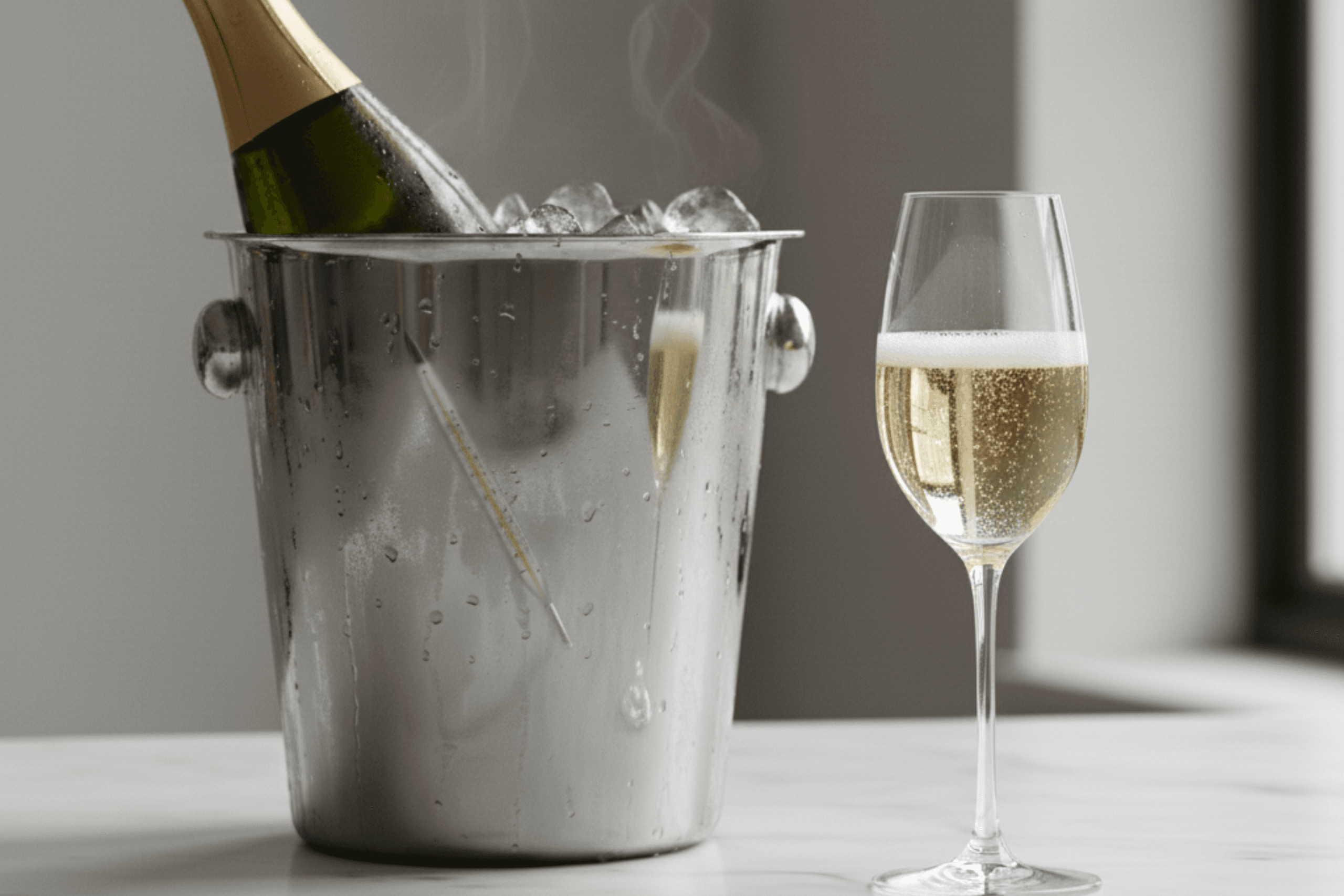
Glass shape and material directly influence how Champagne warms, releases aroma, and expresses texture, meaning temperature and glassware function as a single system from pour to finish.
- Flutes preserve effervescence but constrain aroma
The narrow bowl limits surface area, restricting aromatic lift even when Champagne is served at the correct temperature.
- Tulip glasses balance temperature control and aromatic lift
A wider mid-bowl allows aromas to gather while the tapered rim preserves mousse without accelerating CO₂ loss.
- White wine glasses maximize expression but warm the wine faster
Their broad bowl increases air exposure and hand contact, causing Champagne to rise in temperature more quickly.
- Glass thickness affects heat transfer
Thin crystal warms Champagne rapidly, while thicker glass slows temperature change but can reduce tactile clarity.
- Stem length and hand placement matter
Holding the bowl transfers heat directly from the hand, raising the wine’s temperature faster than holding the stem.
- Rim diameter influences perception of acidity and texture
Narrow rims focus acidity and bubbles, while wider rims enhance texture and mid-palate breadth as temperature increases.
- Temperature evolution should be intentional, not accidental
Glassware should support gradual warming so the Champagne opens progressively rather than losing balance too quickly.
In practice, serving temperature must always be selected with glassware in mind to allow Champagne to reach its full expression rather than being limited by the vessel.
How to Chill Champagne Correctly
The fastest and safest way to chill Champagne is an ice and water bath for approximately 20–30 minutes. Water dramatically improves surface contact compared to ice alone, allowing heat to transfer evenly through the glass and into the wine rather than chilling the bottle exterior unevenly.
For best results, the bottle should be submerged up to the neck and gently rotated during chilling. This prevents cold zones from forming and helps stabilize the internal liquid temperature, which is especially important for preserving mousse quality and aromatic balance once the bottle is opened.
Refrigeration remains a dependable alternative when time allows, though it requires patience. Most refrigerators take three to four hours to bring Champagne into its ideal serving range, but this slower cooling method minimizes pressure disruption and preserves structural integrity.
Freezers should be avoided, even for short periods. Rapid temperature shifts increase internal pressure stress and raise the risk of cork displacement or glass failure, while also suppressing aromatic expression and textural nuance.
Dry ice buckets and salt-heavy ice baths introduce a different problem by over-chilling the bottle’s exterior without stabilizing the liquid inside. This creates a false sense of readiness, as the wine often warms too quickly in the glass and loses balance shortly after pouring.
Correct chilling is about control rather than speed. When Champagne reaches its intended serving temperature evenly and safely, it retains freshness, aromatic clarity, and the fine bead structure that defines its character.
Final Expert Perspective: Temperature as a Form of Respect
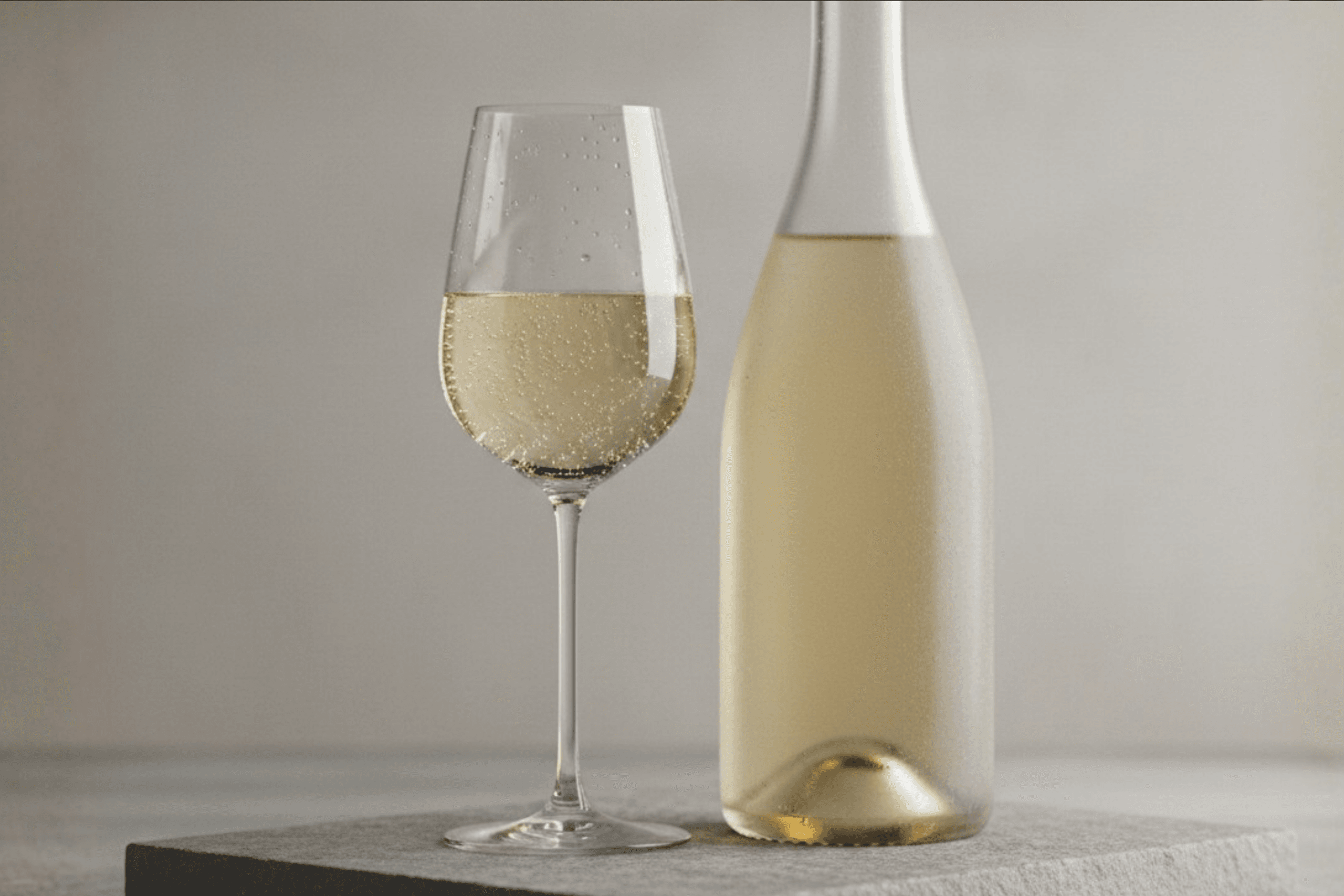
Serving Champagne at the right temperature is not ritual or preference; it is recognition of the wine’s physics, craftsmanship, and the time invested in its creation. When temperature is correct, Champagne does not shout or rely on spectacle. It speaks clearly, completely, and with intention.
At California Champagne Sabers, this philosophy extends beyond the pour itself. Our collection of Champagne sabers and Champagnes is curated with the same respect for tradition, precision, and celebration. Whether opening a non-vintage Brut or a prestige cuvée, proper temperature ensures the moment honors both the wine and the occasion, allowing each bottle to express its full character rather than being masked by excess cold.
Temperature is the final, invisible decision made before the cork releases. When handled correctly, it transforms Champagne from a beverage into an experience worthy of the craftsmanship behind it.