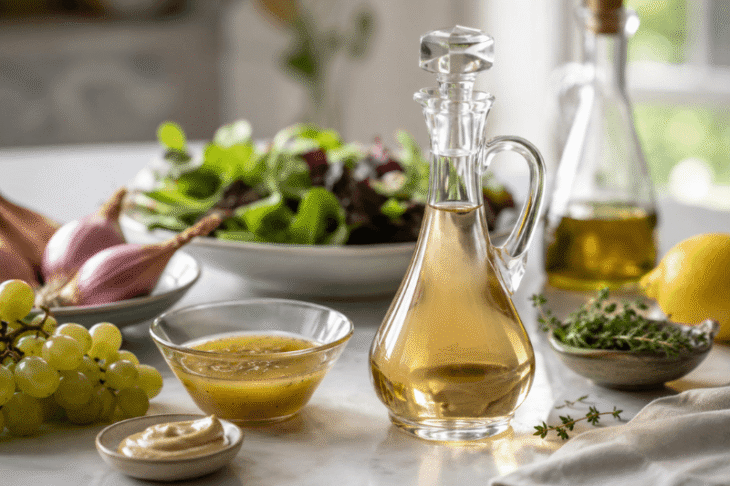
What Is Champagne Vinegar? Taste, Uses, and Substitutes
Champagne vinegar is a light, crisp wine vinegar made from Champagne, Champagne-style wine, or wines produced from Champagne grape varieties, and it is prized for its mild acidity, delicate fruit notes, and elegant use in dressings, sauces, seafood, and light marinades.
Champagne vinegar is one of those pantry ingredients that looks simple but changes the way a dish feels. It does not shout the way distilled vinegar can. It does not bring the deep sweetness of balsamic or the rustic fruitiness of apple cider vinegar. Instead, it adds brightness, lift, and balance.
Key Takeaways
- Champagne vinegar is a mild wine vinegar associated with Champagne, Champagne-style wine, or Champagne grape varieties.
- It usually tastes lighter, cleaner, and less harsh than white wine vinegar.
- It works especially well in vinaigrettes, seafood dishes, delicate sauces, mayonnaise, and light marinades.
- Good substitutes include white wine vinegar, rice vinegar, apple cider vinegar, and sherry vinegar.
- For pickling or home canning, always check the acidity level on the label because tested canning recipes typically require 5% acidity.
What Is Champagne Vinegar?
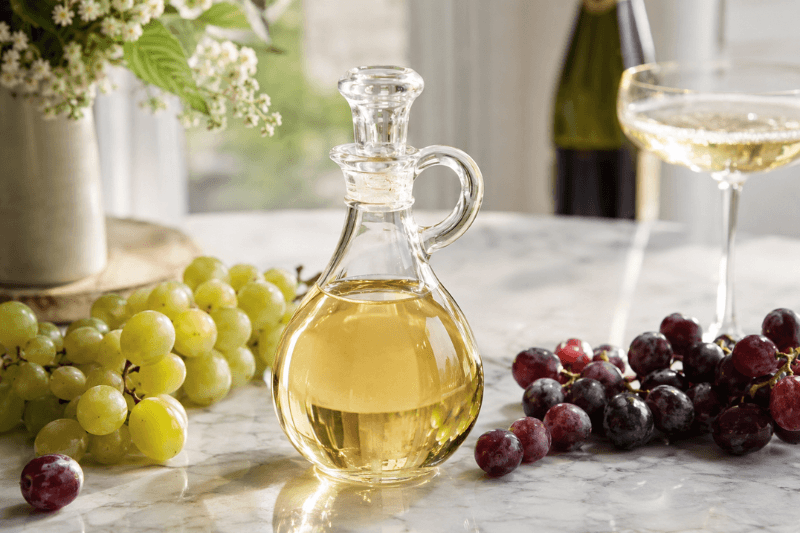
Champagne vinegar is a type of wine vinegar made by fermenting Champagne, Champagne-style sparkling wine, or wine made from grapes associated with Champagne. Its defining quality is gentle acidity. It gives food a clean, bright finish without overwhelming more delicate ingredients.
The grapes most often associated with Champagne are Chardonnay, Pinot Noir, and Meunier. The official Champagne region notes that these are the most commonly used varieties in the appellation, with Pinot Noir accounting for 38% of vineyard area and Chardonnay and Meunier also central to Champagne production.
That grape connection is important because it helps explain the vinegar’s style. Chardonnay can bring freshness and finesse. Pinot Noir can add structure and subtle fruit. Meunier can contribute roundness. When those wine characteristics are transformed into vinegar, the result is usually pale, crisp, and more graceful than many stronger vinegars.
Is Champagne Vinegar Made From Real Champagne?
Champagne vinegar can be made from real Champagne, but not every bottle on the shelf is necessarily made from finished Champagne from the Champagne region of France. Some products are made from Champagne-style wine or from wines produced using Champagne grape varieties.
This distinction matters because “Champagne” is a protected regional term when used for sparkling wine. In food retail, however, the phrase “Champagne vinegar” is commonly used to describe a pale, delicate wine vinegar inspired by Champagne’s flavor profile. Some traditional French versions are made from Chardonnay, Pinot Noir, and Meunier and may be aged in oak barrels. One French producer, Clovis, describes its Champagne vinegar as made from wines produced from Chardonnay, Pinot Noir, and Meunier and aged for six years in oak barrels in Reims.
When shopping, read the label carefully. A high-quality bottle should make the base wine, grape source, production method, or aging style clear.
Is Champagne Vinegar Alcoholic?
Champagne vinegar is not used like an alcoholic beverage. It begins with wine, but vinegar production converts alcohol into acetic acid through fermentation. Depending on the product, there may be trace residual alcohol, but Champagne vinegar is treated as vinegar for culinary use.
The important thing to understand is that vinegar’s sharpness comes from acetic acid, not from alcohol. The FDA’s vinegar guidance states that listed vinegar varieties should contain 4 grams of acetic acid per 100 mL, equal to 4% acidity.
What Does Champagne Vinegar Taste Like?
Champagne vinegar tastes light, crisp, gently tart, and faintly fruity. It may have subtle floral or wine-like notes, but it does not usually taste like drinking Champagne. Its purpose is not to imitate bubbles or sweetness. Its value is balance.
Compared with common vinegars, Champagne vinegar is usually:
- Softer than white wine vinegar
- Cleaner than apple cider vinegar
- Lighter than sherry vinegar
- Less sweet and heavy than balsamic vinegar
- More refined than distilled white vinegar
This is why it is especially useful in recipes where acidity should support the dish rather than dominate it. A Champagne vinaigrette over butter lettuce, pear, and goat cheese feels balanced because the vinegar brightens the salad without covering its delicate flavors.
Why Champagne Vinegar Tastes Lighter Than Many Vinegars
Champagne vinegar often tastes lighter because it comes from a wine base that is already associated with finesse, acidity, and subtle fruit. The fermentation process turns that wine into vinegar, but the finished product can still retain a cleaner and more delicate profile than vinegars made from stronger or darker bases.
Some premium versions are also aged, which can round the acidity and add quiet complexity. Barrel aging is not necessary for every kitchen use, but it can make the vinegar feel smoother in simple dressings where every ingredient is noticeable.
How Is Champagne Vinegar Made?
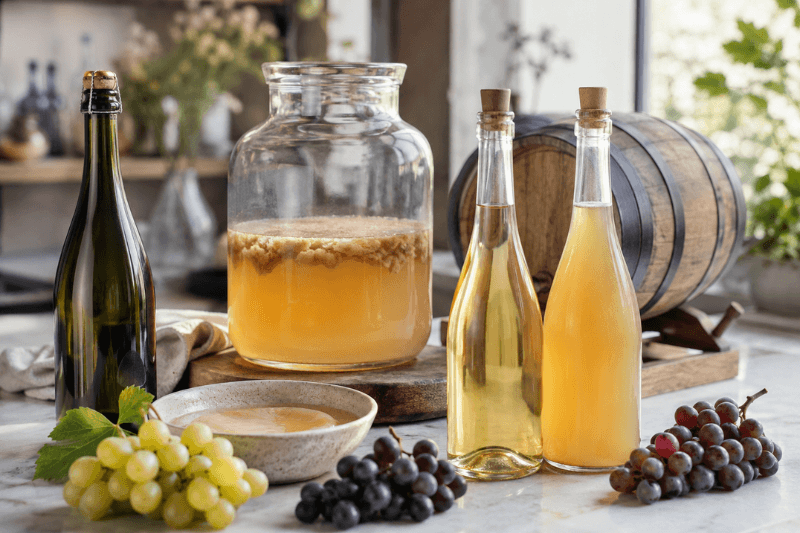
Champagne vinegar is made through acetic fermentation. A wine base is exposed to acetic acid bacteria, which convert alcohol into acetic acid. That acetic acid gives vinegar its sour taste and preservative character.
The basic process looks like this:
- A wine or Champagne-style base is selected.
- Acetic acid bacteria are introduced or encouraged.
- Alcohol converts into acetic acid.
- The vinegar may be aged, filtered, bottled, or left raw and unfiltered.
- Some producers blend or flavor the vinegar for a specific culinary style.
The final flavor depends on the base wine, fermentation method, acidity level, aging time, filtration, and whether the vinegar is plain or infused.
What Does “With the Mother” Mean?
A vinegar “with the mother” contains naturally occurring strands of cellulose and bacteria from the vinegar-making process. It may look slightly cloudy or have sediment at the bottom of the bottle.
Raw, unfiltered Champagne vinegar with the mother can have a fuller, more natural character. Filtered Champagne vinegar may look clearer and taste cleaner. Neither style is automatically better for every use. For a polished vinaigrette, filtered vinegar can be ideal. For people who like raw pantry ingredients, an unfiltered version may be more appealing.
Does Oak Aging Matter?
Oak aging can matter, especially in simple recipes. A barrel-aged Champagne vinegar may taste rounder, softer, and more complex than a basic everyday bottle. Oak can add subtle depth without turning the vinegar heavy.
That said, you do not need an expensive barrel-aged Champagne vinegar for every recipe. If the vinegar is being mixed into a marinade with garlic, mustard, oil, and herbs, a moderately priced bottle is usually enough. If it is the main flavor in a vinaigrette, mignonette, or finishing sauce, a higher-quality bottle can make a noticeable difference.
Champagne Vinegar vs White Wine Vinegar
Champagne vinegar and white wine vinegar are both wine vinegars, but they do not taste exactly the same. Champagne vinegar is typically milder, lighter, and more delicate. White wine vinegar is usually sharper and more direct.
Brightland describes Champagne vinegar as lighter in flavor and less acidic than white wine vinegar, making it useful when you want to enhance a dish without overpowering it.
When to Choose Champagne Vinegar
Choose Champagne vinegar when the dish is delicate, pale, fresh, or refined. It works especially well with:
- Butter lettuce, arugula, frisée, and spring greens
- Seafood and shellfish
- Poached chicken
- Asparagus, fennel, cucumber, and radishes
- Light cream sauces
- Homemade mayonnaise
- Champagne vinaigrette
- Mignonette for oysters
When White Wine Vinegar Works Better
White wine vinegar is better when you want a sharper, more assertive acidity. It can be a practical choice for:
- Stronger marinades
- Everyday pickles
- Robust pan sauces
- Hearty bean salads
- Recipes where Champagne vinegar would be too subtle
- Budget-friendly cooking
If substituting white wine vinegar for Champagne vinegar, start with slightly less and adjust to taste.
Champagne Vinegar vs Other Vinegars
Champagne vinegar is easiest to understand when compared with other common vinegars. Each vinegar has its own acidity, color, aroma, and culinary personality.
Champagne Vinegar vs Apple Cider Vinegar
Apple cider vinegar is made from fermented apple cider. It tastes fruitier, more rustic, and sometimes sharper. Champagne vinegar tastes cleaner, paler, and more refined.
Use apple cider vinegar when you want a warm fruit note, especially in slaws, barbecue sauces, pork dishes, or fall salads. Use Champagne vinegar when you want a lighter finish for greens, seafood, or elegant dressings.
Champagne Vinegar vs Rice Vinegar
Rice vinegar is mild, smooth, and often slightly sweet. It is a good substitute for Champagne vinegar because it does not overpower food. Champagne vinegar, however, tastes more wine-like and can feel more at home in French-inspired sauces and vinaigrettes.
Use rice vinegar in Asian-style dressings, sushi rice, cucumber salads, and dipping sauces. Use Champagne vinegar in vinaigrettes, seafood, and light European-style cooking.
Champagne Vinegar vs Sherry Vinegar
Sherry vinegar is darker, nuttier, and deeper. It comes from sherry wine and often has a more pronounced flavor. Champagne vinegar is lighter, brighter, and less intense.
Use sherry vinegar for roasted vegetables, beans, mushrooms, charcuterie boards, and Spanish-inspired dishes. Use Champagne vinegar when the dish needs a clean lift instead of a deep, nutty tang.
Champagne Vinegar vs Balsamic Vinegar
Balsamic vinegar is sweet, dark, syrupy, and rich. Champagne vinegar is pale, crisp, and delicate. These two vinegars are not interchangeable in many recipes because they change both the flavor and appearance of the dish.
Balsamic works well with tomatoes, strawberries, steak, roasted vegetables, and aged cheeses. Champagne vinegar works better with light greens, seafood, chicken, and creamy sauces.
Champagne Vinegar vs Red Wine Vinegar
Red wine vinegar is bolder, more tannic, and more colorful. It is excellent for Greek salads, red meat marinades, lentils, beans, and hearty vegetables. Champagne vinegar is better when you want acidity without color or heaviness.
Best Uses for Champagne Vinegar
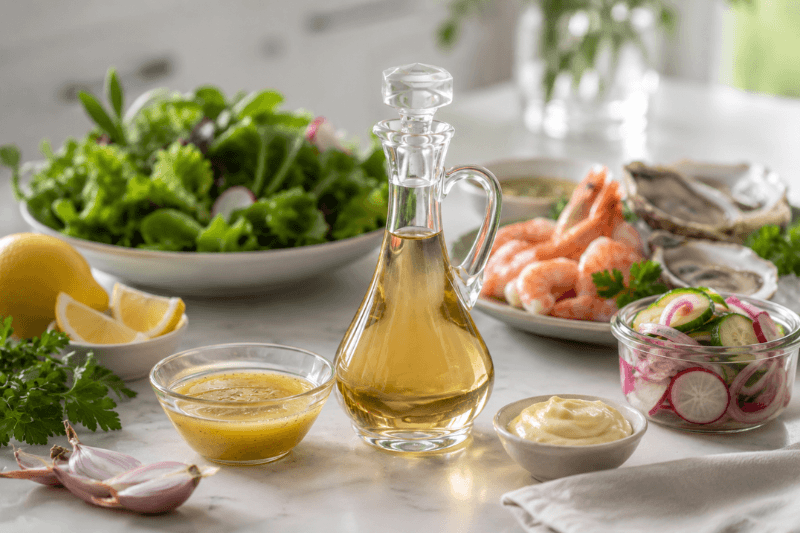
Champagne vinegar is best used in dishes that benefit from brightness, elegance, and restraint. It is not the vinegar for every job, but in the right recipe, it can make a dish taste more finished.
Champagne vinegar is best for vinaigrettes, seafood, delicate vegetables, light marinades, mayonnaise, sauces, and quick pickles where a mild, clean acidity is more useful than a strong vinegar bite.
Salad Dressings and Vinaigrettes
This is the classic use. Champagne vinegar makes a refined salad dressing because it blends easily with olive oil, Dijon mustard, shallots, herbs, honey, and citrus.
It pairs well with:
- Butter lettuce
- Baby arugula
- Mixed greens
- Endive
- Pears
- Apples
- Strawberries
- Goat cheese
- feta
- toasted almonds
- walnuts
- smoked salmon
- grilled chicken
A Champagne vinaigrette can make a simple salad feel restaurant-level without requiring complicated ingredients.
Seafood and Shellfish
Champagne vinegar is excellent with seafood because it adds acidity without making the dish taste harsh. It works with oysters, shrimp, scallops, crab, poached fish, and smoked salmon.
For oysters, Champagne vinegar can be used in a mignonette with finely minced shallots and cracked black pepper. For shrimp or scallops, it can be whisked into a light marinade or finishing sauce with herbs and olive oil.
Chicken, Pork, and Light Marinades
Champagne vinegar works well in marinades for chicken, pork tenderloin, and turkey because it tenderizes and brightens without becoming too aggressive. Combine it with olive oil, Dijon mustard, garlic, herbs, salt, and pepper.
It is especially useful when you want the meat to stay clean-tasting rather than heavily seasoned.
Sauces and Emulsions
Champagne vinegar is useful in sauces because it sharpens flavor without darkening the dish. It works well in:
- Hollandaise-style sauces
- beurre blanc-style reductions
- aioli
- homemade mayonnaise
- pan sauces
- cream sauces
- mustard sauces
A small amount can bring balance to rich foods. This is the same reason chefs often finish dishes with acid. Fat, salt, and sweetness all become clearer when acidity is properly balanced.
Pickling Delicate Vegetables
Champagne vinegar can be used for quick pickling delicate vegetables such as cucumbers, onions, asparagus, radishes, and fennel. It keeps the color light and the flavor clean.
For quick refrigerator pickles, Champagne vinegar can be a beautiful choice. For shelf-stable home canning, check the label and use only tested recipes. The National Center for Home Food Preservation recommends 5% acidity vinegar for pickling, and several university extension resources warn that vinegars below 5% acidity should not be used for safe home canning.
Cocktails, Shrubs, and Nonalcoholic Drinks
Champagne vinegar can also be used in shrubs, spritzes, and nonalcoholic drinks. A shrub is a vinegar-based syrup usually made with fruit and sugar. Because Champagne vinegar is mild, it works well with berries, peaches, citrus, cucumber, and herbs.
A small splash can make a mocktail taste brighter and more adult without adding alcohol.
How to Make a Simple Champagne Vinaigrette
A Champagne vinaigrette is one of the easiest ways to use Champagne vinegar. It tastes polished, but it takes only a few minutes.
A classic Champagne vinaigrette is made by whisking Champagne vinegar with Dijon mustard, salt, pepper, and a small amount of honey or shallot, then slowly adding olive oil until the dressing becomes smooth and balanced.
Classic Champagne Vinaigrette Formula
Use this simple ratio:
- 1 part Champagne vinegar
- 3 parts extra-virgin olive oil
- 1 teaspoon Dijon mustard
- 1 teaspoon honey or maple syrup
- 1 tablespoon finely minced shallot
- Salt and black pepper to taste
Whisk the vinegar, Dijon, honey, shallot, salt, and pepper first. Slowly drizzle in the olive oil while whisking until the dressing emulsifies. Taste and adjust. If it is too sharp, add more oil or a little more honey. If it tastes flat, add a pinch of salt or a splash more vinegar.
Serious Eats uses Champagne vinegar with Dijon mustard, honey, salt, and oil in its Champagne vinaigrette method, which reflects the classic balance of acid, emulsifier, sweetness, and fat.
Best Foods to Pair With Champagne Vinaigrette
Champagne vinaigrette pairs well with:
- Arugula and shaved Parmesan
- Butter lettuce and herbs
- Pear, walnut, and goat cheese salad
- Apple and fennel salad
- Smoked salmon salad
- Grilled chicken salad
- Roasted asparagus
- Poached shrimp
- Citrus and avocado salad
It is also excellent as a light finishing sauce for roasted vegetables or grain bowls.
Best Champagne Vinegar Substitutes
The best substitute for Champagne vinegar depends on what you are making. The goal is to replace its mild acidity without overwhelming the recipe.
The best Champagne vinegar substitute is white wine vinegar because it has a similar wine-based acidity, but rice vinegar, apple cider vinegar, sherry vinegar, or lemon juice can also work depending on the dish.
White Wine Vinegar
White wine vinegar is the best overall substitute. It is easy to find and has a similar wine-based flavor. Because it can be sharper than Champagne vinegar, start with slightly less and adjust.
Best for:
- vinaigrettes
- marinades
- sauces
- quick pickles
- chicken dishes
Rice Vinegar
Rice vinegar is the best mild substitute. It is smooth and gentle, making it useful for salads, seafood, and lighter dishes.
Best for:
- cucumber salads
- seafood dressings
- slaws
- light vinaigrettes
- Asian-inspired sauces
Apple Cider Vinegar
Apple cider vinegar is a practical pantry substitute. It adds more fruitiness than Champagne vinegar, so it may slightly change the flavor of the dish.
Best for:
- slaws
- chicken marinades
- pork dishes
- fall salads
- honey-mustard dressings
Sherry Vinegar
Sherry vinegar is a deeper, more flavorful substitute. It is not as delicate, so use less if the recipe depends on subtlety.
Best for:
- roasted vegetables
- beans
- mushrooms
- hearty salads
- pan sauces
Lemon Juice or Dry White Wine With Lemon
Lemon juice can replace Champagne vinegar when the recipe needs brightness rather than a stronger vinegar flavor. It works especially well when you want acidity without adding too much sharpness. Dry white wine with a small splash of lemon juice can also work in sauces, helping add light acidity and gentle depth.
Best for:
- seafood
- chicken
- sauces
- dressings
- quick flavor adjustments
Other light, mild substitutes for Champagne vinegar include rice vinegar, white wine vinegar, and sherry vinegar. These options can work well when you need a delicate acidity that does not overpower the dish.
How to Choose a Good Champagne Vinegar
A good Champagne vinegar should taste clean, bright, and balanced. It should not taste harsh, flat, overly sweet, or artificially perfumed.
Look for these details:
- A clear ingredient list
- Wine, Champagne, or grape variety information
- Acidity percentage
- No unnecessary added sugar unless it is a flavored product
- A pale gold or straw color
- A fresh, wine-like aroma
- Barrel-aging details if buying a premium bottle
- Raw or unfiltered labeling if that matters to you
If you are buying Champagne vinegar for salad dressings, choose the best bottle you reasonably can. In a vinaigrette, the vinegar is not hidden. Its quality will show.
What Acidity Percentage Should You Look For?
Many vinegars sold for culinary use fall around 4% to 5% acidity. For general salad dressings and sauces, the exact number is usually a matter of flavor and label standards. For canning, it becomes a safety issue.
The FDA’s vinegar guidance references 4% acetic acid as a standard minimum for listed vinegar varieties. However, home canning guidance typically requires 5% acidity for tested pickling recipes.
This means Champagne vinegar can be wonderful for quick pickles and refrigerator pickles, but you should not assume every bottle is safe for shelf-stable canning. Always read the label.
How to Store Champagne Vinegar
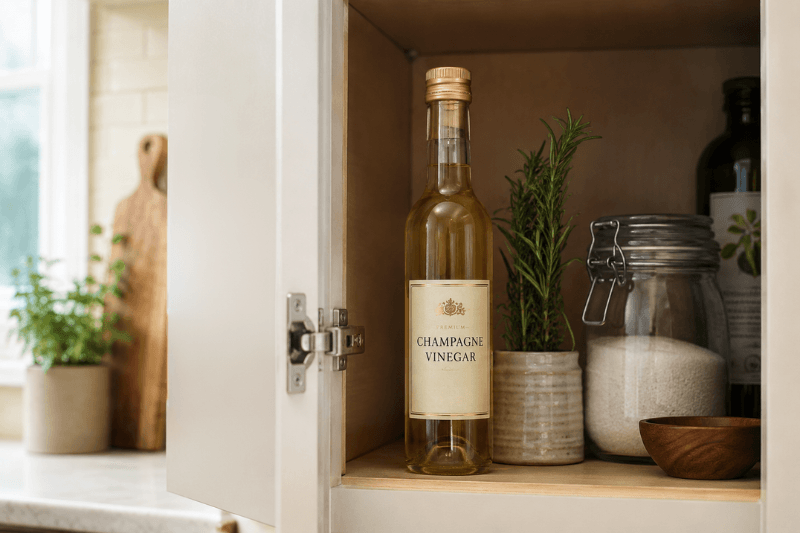
Store Champagne vinegar in a cool, dark pantry or cabinet. Keep the cap tightly closed and avoid placing it near heat, sunlight, or the stove.
It does not usually need refrigeration because vinegar is acidic. However, heat and oxygen can dull its flavor over time. For best quality, use it within a reasonable period after opening, especially if it is a premium bottle.
Does Champagne Vinegar Go Bad?
Champagne vinegar is shelf-stable, but its flavor can fade. Over time, it may become less aromatic or slightly dull. Sediment or cloudiness can be normal in raw vinegar, especially if it contains the mother.
Discard it if you notice mold, a rotten odor, unusual discoloration, or a dramatic change in texture.
Common Mistakes When Using Champagne Vinegar
Champagne vinegar is easy to use, but a few mistakes can keep it from doing its best work.
Using Too Much
Because it tastes mild, it can be tempting to pour more. Add it gradually. A delicate vinegar still contains acidity, and too much can make a dressing or sauce taste thin and sour.
Treating It Like Distilled Vinegar
Distilled vinegar is sharp and neutral. Champagne vinegar is flavorful and delicate. It is better for food than for cleaning or heavy-duty acidity.
Pairing It With Overly Bold Ingredients
Champagne vinegar can disappear when paired with very spicy, smoky, or heavily seasoned ingredients. Use stronger vinegars for stronger dishes.
Using It for Canning Without Checking Acidity
Do not use Champagne vinegar for shelf-stable pickling unless the label shows the correct acidity and the recipe is tested for that type of vinegar.
Buying Flavored Vinegar by Accident
Some Champagne vinegars are infused with citrus, herbs, fruit, or honey. These can be delicious, but they may not work in recipes that call for plain Champagne vinegar.
Is Champagne Vinegar Worth Buying?
Champagne vinegar is worth buying if you make salads, seafood, sauces, chicken dishes, quick pickles, or elegant appetizers. It is not the cheapest vinegar and it is not the strongest, but that is the point. Its strength is subtlety.
If your pantry already has balsamic, apple cider vinegar, and white wine vinegar, Champagne vinegar adds a more refined option. It gives you a way to brighten food without making it taste aggressively acidic.
For entertaining, it is especially useful. A crisp Champagne vinaigrette, a chilled oyster mignonette, or a light seafood salad can make a meal feel more thoughtful without requiring complicated preparation.
At California Champagne Sabers, we believe the smallest details can make a celebration feel more intentional. Once you have explored how Champagne vinegar brings balance, brightness, and refinement to food, you can bring that same sense of elegance to the way you celebrate. Explore our collection of Champagne sabers, Champagne, and accessories, or add a personal touch with custom engraving. For events, client gifts, and memorable gatherings, our corporate gifting and wholesale options can also help create a polished experience from the first pour to the final toast.
FAQs
What is Champagne vinegar made of?
Champagne vinegar is made from Champagne, Champagne-style wine, or wine associated with Champagne grape varieties such as Chardonnay, Pinot Noir, and Meunier. The wine is fermented into vinegar through the action of acetic acid bacteria.
Does Champagne vinegar taste like Champagne?
Champagne vinegar does not taste like sparkling Champagne. It has a light, crisp, wine-like acidity with subtle fruit or floral notes, but it does not have bubbles or the same drinking profile as Champagne.
Is Champagne vinegar the same as white wine vinegar?
Champagne vinegar and white wine vinegar are both wine vinegars, but they are not exactly the same. Champagne vinegar is usually milder and more delicate, while white wine vinegar is often sharper and more assertive.
What is the best substitute for Champagne vinegar?
White wine vinegar is the best overall substitute for Champagne vinegar. Rice vinegar is the best mild substitute, while apple cider vinegar can work when a slightly fruitier flavor is acceptable.
Is Champagne vinegar good for salad dressing?
Yes. Champagne vinegar is excellent for salad dressing because it adds clean acidity without overpowering delicate greens, herbs, fruit, cheese, or seafood.
Does Champagne vinegar need to be refrigerated?
Champagne vinegar does not usually need to be refrigerated. Store it tightly sealed in a cool, dark place away from heat and sunlight.