
What is a Champagne Saber? A Beginner's Guide for Sabering Champagne in 2026
Last Updated on: January 08, 2026
A Champagne saber is a blunt, ceremonial blade used for sabrage, the practice of opening a bottle of Champagne by striking the bottle’s lip so the collar and cork break off in one clean motion. The saber does not cut the glass; it relies on internal pressure and a precise impact along the bottle’s seam. When performed correctly, sabrage produces a dramatic opening that combines physics, tradition and celebration. The technique requires a chilled bottle, proper angle, a firm strike and attention to safety. Today it is practiced at weddings, milestone events, restaurants and private gatherings.
Key Takeaways
- A Champagne saber is designed for impact, not slicing, and uses bottle pressure to release the cork and collar.
- Sabrage originated with Napoleonic cavalry and later became a hallmark of luxury celebrations.
- Successful sabering requires chilling the bottle, finding the seam and striking the lip with a smooth and confident motion.
- Safety matters because the cork and glass collar can travel several feet at high velocity.
- Modern sabrage appears in weddings, restaurants, hospitality and pop culture as a way to elevate celebratory moments.
What is a Champagne Saber?
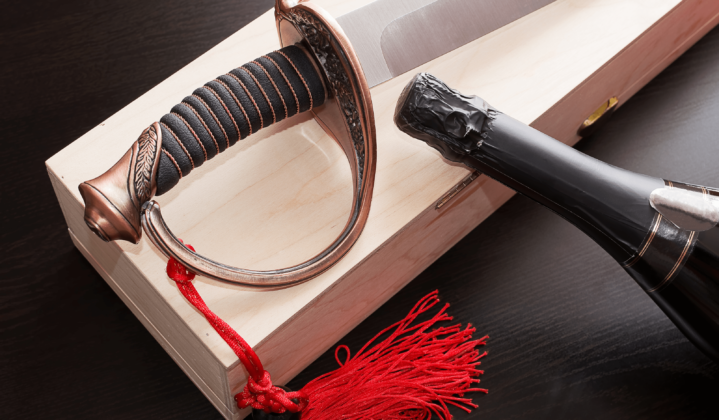
A Champagne saber is a ceremonial blade used specifically for opening sparkling wine through sabrage. Unlike sharpened swords or kitchen knives, its edge is intentionally blunt. The goal of the blade is to deliver a controlled impact against the lip of the bottle. The seam of the bottle acts as a guide, and the pressure inside the bottle completes the separation of cork and collar.
The saber’s form reflects its purpose. Most models feature a moderately long blade, a prominent guard to protect the hand and a handle that allows confident, single-motion strikes. Rather than being a weapon or cutting instrument, the Champagne saber functions as a tool of ceremony, transforming the opening of a bottle into a formal gesture rooted in history and technique.
How Champagne Sabering Works?
The mechanics of sabrage are straightforward once understood. Sparkling wine bottles contain considerable internal pressure created during secondary fermentation. When the bottle is chilled, that pressure becomes more stable and the glass more brittle.
The bottle has a vertical seam where two halves were joined during manufacturing. At the top of the neck sits the lip, where the cork and a circular ring of glass form the closure. The lip is structurally rigid but vulnerable to impact.
When the blunt blade glides along the seam and strikes the lip, it concentrates force at the bottle’s weakest point. The pressure inside forces the cork and collar to eject together, leaving a clean opening. The effect appears theatrical, but it is fundamentally a controlled pressure release guided by physics.
The History of Champagne Sabering
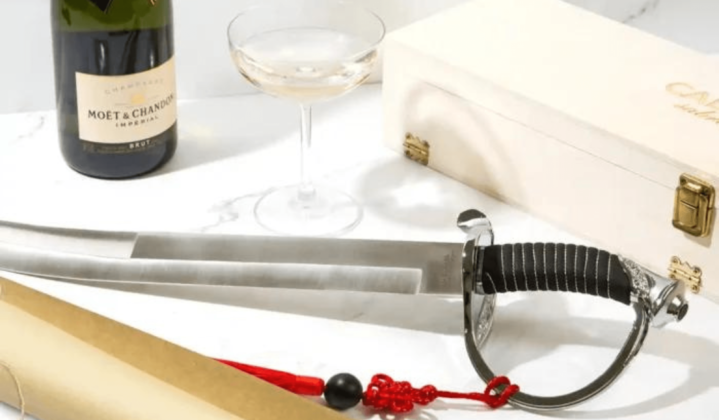
Sabrage traces back to the early nineteenth century, when Napoleon Bonaparte’s light cavalry officers became known for opening Champagne with their sabers after battle. As the legend goes, sabering symbolized victory, daring and the prestige associated with Champagne itself. Young officers mounted on horseback found it easier to remove the top of the bottle with a single strike than to manipulate the wire cage and cork by hand.
The practice traveled from military culture to the salons and dining rooms of Europe’s elite, especially during the Belle Époque, when Champagne consumption surged among the upper classes. In the twentieth century, the ritual entered hospitality and gastronomy. The Confrérie du Sabre d’Or, founded in France, formalized sabrage as a ceremonial tradition and continues to induct members in restaurants and Champagne houses around the world.
Today the ritual remains a symbol of celebration, marrying French heritage, theater and a touch of boldness.
Champagne Saber Anatomy and Materials
While Champagne sabers vary widely in aesthetics, their anatomy follows consistent principles:
- Blade length and geometry. Most blades measure between 12 and 18 inches. Length provides reach and control for a smooth strike without excessive force.
- Blunt edge. Sabers are not sharpened because the goal is impact, not cutting. A blunt edge avoids unpredictable fracture patterns in the glass.
- Steel composition. Stainless steel is common due to stain resistance and durability. Higher quality versions may use forged steel rather than stamped steel for improved balance and longevity.
- Guard and bolster. Many sabers include a guard to protect the hand during the strike and to give the sabre its distinctive silhouette.
- Handle materials. Handles range from wood, bone and horn to resin or metal. Some are plain and utilitarian, while others exhibit ornate engravings or artisanal inlays.
- Balance and weight. A well-balanced saber allows for confident movement and reduces the likelihood of hesitating or overcorrecting during the strike.
Together these attributes make the Champagne saber a specialized tool rather than a decorative novelty.
Champagne Saber vs Other Blades
A Champagne saber differs fundamentally from other blade types. Combat and ceremonial swords are sharpened along their edges and balanced for cutting or thrusting. Kitchen knives are designed to slice through material with precision. Neither are optimized for striking glass at a specific point under pressure.
Experienced saberers sometimes demonstrate sabrage using heavy kitchen knives, the back of a chef’s blade or even the handle of a spoon, emphasizing that sharpness is not part of the technique. These substitutions work because they replicate the blunt impact surface of a saber rather than the slicing function of a knife. However, dedicated sabers offer superior balance, hand protection and ceremonial presence.
How to Saber Champagne (Step-by-Step)

Sabering begins with preparation and continues with a single decisive motion:
- Chill the bottle. Chill the Champagne to approximately 45 to 50 degrees Fahrenheit (7 to 10 degrees Celsius). Cold bottles maintain safer pressure levels and allow cleaner breaks.
- Remove the foil and wire cage. Strip away the foil and loosen the muselet, removing it entirely while keeping the bottle pointed away from people.
- Identify the seam. Locate the bottle’s vertical seam. This seam acts as a guide and is where the glass is most likely to separate cleanly.
- Set the angle. Hold the bottle at a 30 to 45 degree upward angle with one hand firmly around the base or lower body.
- Align the blade. Place the flat side of the saber against the seam, drawing it back several inches behind the lip.
- Strike. In one smooth motion, glide the blade forward along the seam and into the lip. The cork and collar should eject together.
- Serve. Pour a small amount to clear any residual glass before serving. Most bottles open cleanly when technique and temperature are correct.
Safety Protocols and Common Mistakes
While sabrage is visually striking, it must be executed with care. The cork and glass collar can travel several feet and may follow unpredictable trajectories. Always point the bottle away from guests, walls, windows and fragile objects. Protective eyewear and gloves are recommended for beginners.
Common errors include:
- Insufficient chilling. Warm bottles produce erratic breaks and may shatter.
- Hesitation during the strike. Slow or uncertain movements fail to build momentum.
- Incorrect angle. Pointing downward increases pressure risk and reduces safety.
- Unsuitable bottle types. Prosecco and other wines with lower pressure may saber differently or less dramatically. Champagne bottles are thick and engineered for higher internal pressure.
A clear space, firm grip and smooth motion contribute to both success and safety.
Choosing the Right Champagne Saber
Selecting a Champagne saber depends on usage and preference. Beginners tend to favor blades with moderate length and balanced weight, allowing controlled motion without fatigue. Enthusiasts may seek models with artisanal craftsmanship, forged steel blades or traditional handle materials. Collectors and ceremonial users often value engraving, display stands or custom presentation boxes for storage and exhibition.
Sabers now occupy niches across culinary, hospitality, and gifting contexts. Whether functional, decorative or symbolic, their role remains to elevate the opening of Champagne by blending ritual with skill.
When to Saber: Occasions and Etiquette

Sabrage appears at weddings, engagements, milestone birthdays, New Year’s celebrations and corporate events. In hospitality settings, sommeliers and beverage directors may saber to mark the opening of a special bottle or to greet guests during service. At private gatherings, the ritual acts as a conversation piece and a memorable moment for hosts and guests alike.
Etiquette favors composure and safety. The sabered bottle is typically presented immediately after the strike, followed by a toast that invites the room to share the celebratory act. The saberer is often the host or a designated guest of honor, acknowledging the historical significance of the ritual.
Champagne Sabering in Modern Culture
Sabrage has gained visibility in modern media and popular culture. Films, television and digital platforms frequently depict the ritual as a shorthand for luxury, celebration or audacity. Social media has accelerated this trend, with sabering videos circulating widely across Instagram, TikTok and culinary communities. Celebrity chefs, sommeliers and influencers have contributed to its resurgence, blending tradition with contemporary spectacle.
The ritual’s appeal lies in its combination of history, physics and drama — a rare intersection that transforms opening a bottle into a miniature performance.
Frequently Asked Questions
Are Champagne sabers sharp?
Champagne sabers are intentionally blunt rather than sharpened. They are designed to deliver a focused impact to the bottle’s seam and lip, allowing the internal pressure of the sparkling wine to eject the cork and collar cleanly. A sharp edge is not useful for sabrage because the process does not involve cutting the glass. The success of the method relies on mechanical force and bottle pressure rather than slicing. For this reason, most ceremonial sabers feature a polished, dull spine and are produced for display and sabrage rather than conventional blade use.
Can you saber Prosecco or other sparkling wines?
You can saber Prosecco, Cava, Crémant, Franciacorta, and other sparkling wines, although Champagne generally produces the most consistent results due to its higher carbonation pressure, which averages between five and six bar. Many tank fermented wines such as Prosecco sit closer to three or four bar, which means the bottle has less pressure assisting the break and cork ejection. With lower pressure wines, temperature control becomes more important. Chilling to six to eight degrees Celsius helps stabilize foam and allows the strike to produce a clean collar break with minimal mess. When properly chilled and properly struck along the glass seam, non Champagne sparkling wines can be sabered successfully.
Do you remove the wire cage before sabering?
The foil and wire cage must be removed before sabering so the cork can eject freely. Leaving the cage on restricts movement, interferes with the impact on the lip, and can prevent the clean separation of the glass collar. Proper preparation includes fully chilling the bottle, removing foil and cage, drying the exterior to improve grip, locating the seam, and holding the bottle at a steady upward angle so the cork and collar exit safely without endangering the person sabering or nearby spectators.
Why does sabrage work?
Sabrage works due to the combination of structural weakness at the bottle seam, mechanical stress concentrated at the lip, and internal pressure generated by secondary fermentation. Champagne contains dissolved carbon dioxide under pressure. When the saber strikes the seam toward the lip, the glass fails at its most vulnerable junction and the trapped pressure forces the cork and collar outward as a single piece. The pressure inside the bottle directs shards away from the wine, which is why the liquid remains clean and pourable despite the dramatic impact. This interplay between weak point, mechanical strike, and internal pressure is the reason the technique works reliably when performed correctly.
Is sabering dangerous?
Sabering does carry risk due to pressurized liquid, high velocity cork ejection, and glass breakage at the lip. Corks can exit the bottle at speeds comparable to a low speed projectile and can injure eyes or faces if the bottle is not angled safely. In addition, warm or poorly chilled bottles can foam aggressively and break unpredictably. Most accidents occur when bottles are held horizontally or angled toward people, when the person sabering stands too close, or when outdated bottles with weakened glass are used. Thorough chilling, upward angling, correct grip, and proper distancing greatly reduce risk, but sabrage remains a ceremonial technique that should be treated with caution and respect.
Does sabering waste Champagne?
When performed correctly with a cold bottle, sabering results in very little waste. A well chilled bottle at six to eight degrees Celsius typically loses no more than a sip of liquid as the pressure stabilizes after the collar is released. Warmer bottles foam significantly more and can lose a noticeable amount of wine because dissolved carbon dioxide escapes more freely at higher temperatures. Larger formats such as magnums generally waste even less due to higher pressure stability. With correct temperature, correct angle, and a clean strike, sabering is primarily a theatrical method of opening a bottle rather than a wasteful one.
A Celebration of Craft and Culture

Sabering transforms a routine task into a moment of shared excitement. Beneath the drama lies a clear mechanical logic and a lineage reaching back two centuries. Whether performed in a restaurant, a private gathering or a ceremonial setting, sabrage blends precision, confidence and festivity into a single motion. As interest in Champagne culture continues to evolve, the Champagne saber remains one of its most memorable tools. At California Champagne Sabers, our collection of handcrafted sabers celebrates this tradition by offering pieces made for both ceremonial performance and display, allowing modern hosts and enthusiasts to carry the ritual forward with confidence and style.
Explore Our Collection of Champagne Sabers and start your own unforgettable tradition today.